How writing-style matching works: how it differs from interest and personality matching, what Kindredly measures, and what it leaves out
The eight numbers Kindredly reads in the shape of your letters, three sample letters compared, what never comes into it, where AI is and isn't involved, and what a match can't promise.
the short version
Writing-style matching pairs people by the shape of their writing instead of their interests or a personality quiz. Kindredly measures eight numbers in the letters you send, such as sentence length, pauses, questions and trailing off, and each night a fixed formula with no AI model finds the 50 writers closest to you, whose letters reach your desk first.
5 sourcesKindredly is an anonymous penpal app that matches strangers by how they write.
| Approach | What it uses | What you do | Good at | Where it falls short |
|---|---|---|---|---|
| Interest-based | Topics, hobbies, languages or countries you pick | Pick from a list | Finding someone who loves the same thing | Knows only what you chose to list |
| Personality or questionnaire | Your answers to a set of questions | Answer the questions | Reaching further than a hobby list | Depends on honest answers and on whether the questions measure anything that matters |
| Writing style (Kindredly) | The shape of the writing itself | Write | Finding someone who writes like you | Needs real writing; says who writes like you, not who you will like |
Kindredly uses writing-style matching. The other two rows describe approaches in general, not any one app.
You write a letter about the first cold morning of the year. Somewhere, a stranger writes about a bus that never came. Their sentences are short, like yours, and they close every thought the way you do. Neither of you picked a hobby or answered a quiz. On Kindredly, that shared shape is why one letter lands on the other's desk first.
That is writing-style matching: pairing people by how they write instead of by what they say they like. Kindredly measures eight numbers from the letters you send, such as how long your sentences run, where you pause and whether you ask questions, and every night a fixed formula compares everyone's numbers. No AI model takes part in the match, and what your letter is about is never measured.
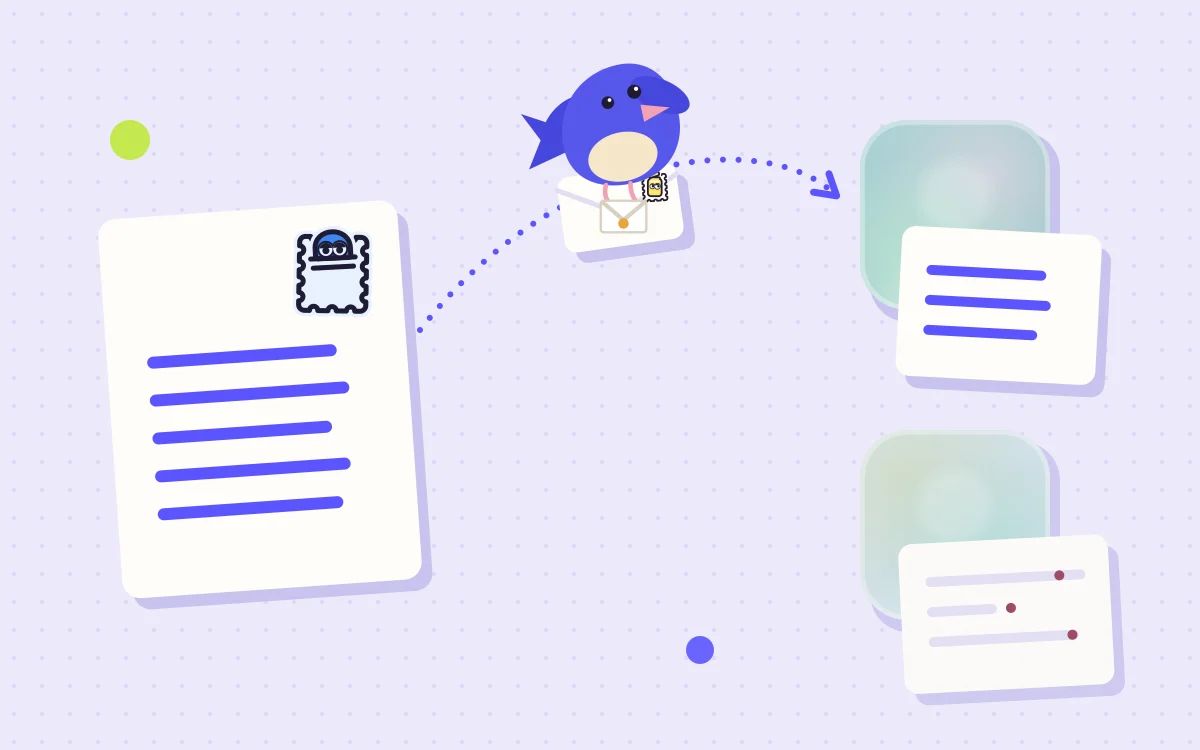
Interests, personality or writing style: three ways to match pen pals
Apps that introduce strangers mostly use one of three approaches.
- Interest-based matching. You pick topics, hobbies, languages or countries, and the app introduces people whose picks overlap. Good at finding someone who loves the same thing. It knows only what you chose to list.
- Personality or questionnaire matching. You answer a set of questions, and the app pairs people by its own rules. It reaches further than a hobby list, and depends on honest answers and on whether the questions measure anything that matters.
- Writing-style matching. You write, and the app measures the shape of the writing itself. You never describe yourself. It needs real writing, and it says who writes like you, not who you will like.
Kindredly uses the third. There is no profile, no profile photos, no interests or tags to pick and no swiping. You write one letter to nobody in particular, and it lands first on the desks of strangers whose writing is closest to yours. The best pen pal apps compares it with others; your words are your fingerprint is the case for prose over profiles.
What Kindredly measures: eight numbers from the shape of your writing
Kindredly calls it a writing fingerprint: eight numbers, measured from the letters and messages you send.
- Average sentence length. How long your sentences run.
- Pause density. Commas, dashes and ellipses per word.
- Burstiness. How uneven your sentence lengths are: an even breath, or short, long, short.
- Average breath length. The span between punctuation stops.
- Breath variance. How much those spans change.
- Question density. Questions per sentence.
- Exclamation density. How often you use exclamation marks.
- Trailing off. Ellipses and dashes per word.
Word counts are script-aware, so Chinese, Japanese and Korean are measured on the same scale as English or Spanish. A stranger writing in another language can still write like you.
Punctuation carrying this much weight has research behind it. In a 2021 paper in the European Journal of Applied Mathematics, Alexandra Darmon, Mason Porter and colleagues kept only the punctuation marks of literary texts from Project Gutenberg, and the number of words between them, and called their attempts at telling authors apart "particularly successful".
Three sample letters, measuredThese were written by Kindredly for this page. A and B are about the same morning.
A. The first cold morning came today. I wore the wrong coat. The bus was late again. Nobody on it spoke. I bought tea just to hold it.
B. It got cold this morning, properly cold, the kind where you stand at the window and wonder whether the day is worth it, and then the kettle clicks and you go anyway. Do you have a coat you only wear once a year? Mine smells of last winter — woodsmoke, or someone else's cigarettes, I never worked out which... Odd.
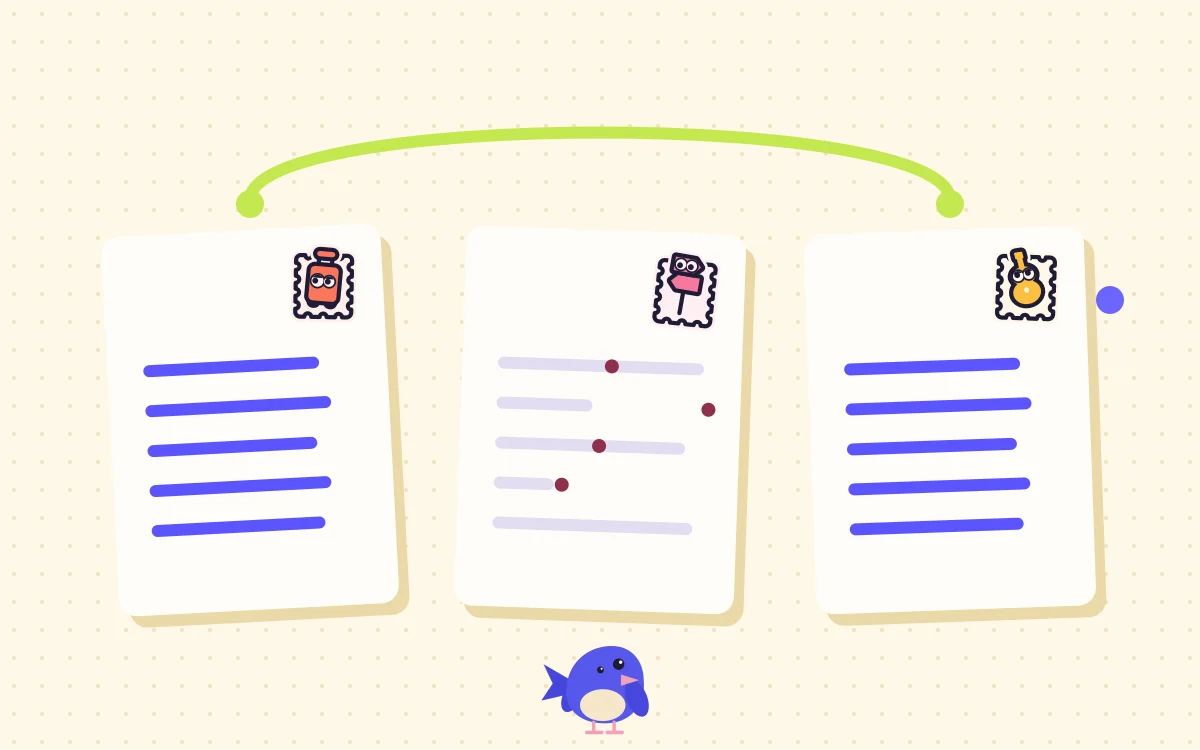
- Sentence length and burstiness. A's sentences are short and similar. B opens with one long sentence and ends on a single word, so its lengths are far more uneven.
- Pauses and breath. A has no commas at all. B stops again and again. Because B's long sentences are cut into pieces, the two can land closer on average breath length than you would guess; they part on breath variance.
- Questions. A asks nothing. B asks one.
- Exclamation marks. Neither uses one, so they agree.
- Trailing off. A closes every thought. B has a dash and an ellipsis.
C. My sister got married on Saturday. The hall was too warm. Her husband cried first. I kept my speech short. It went well, I think.
C is about a wedding, not the weather, but its shape is A's. Run through the formula Kindredly uses, A and C come out close together and B further from both. Which of them you would rather write to is a different question, and the numbers can't answer it.
What Kindredly leaves out
Matching never uses:
- What your letters are about. No topics, keywords or meaning.
- Photos and looks. There are no profile photos.
- Where you live. There is no location matching.
- Interests. There is nothing to tick.
- Money. Paying for First Class never changes who you're matched with or where your letter sits on a desk.
- Your journal. It stays on your device.
Writing is not the whole of it, though: your age nudges the order a little. What Kindredly keeps about you is set out in the privacy policy, and deleting your account in Settings is immediate.
How a match is made
- You write. The fingerprint comes from what you send, so matching gets better as you write more.
- The formula runs. It is fixed and deterministic, the same on iPhone and on the web.
- Everyone is compared at night. At 08:00 UTC a job compares everyone's fingerprints by cosine similarity, a standard way of scoring how closely two lists of numbers line up.
- Your closest writers are kept. For each person, the 50 closest. The list is worked out for each person, so you can be on someone's list without them being on yours.
- Your desk is dealt. Up to ten strangers' letters land on your desk a day, those writers' first, other letters after. Your desk's day turns at 8:00 in the morning, your time. Until the nightly job has your fingerprint, a new writer's desk is filled from the pool of recent letters.
Your own letter lands first with the strangers whose writing is closest to yours. When one writes back, you have a pen pal. They see your letters, a name the app gives you (never your own), your star sign unless you turn it off, and a frosted window: a pattern of colour, not a picture. After five letters each way either of you can enclose your name, and names are swapped only when you both have. The rest of the product is on how Kindredly works.
Cosine has a history in the study of style: in 2017, Stefan Evert and colleagues showed that what made the cosine version of Delta, a standard authorship measure, work better was scaling every profile to the same length, so that it compares the pattern of a profile more than its size.
Where AI is used, and where it isn't
Not used: the matching, which is the formula above, and writing, drafting or answering letters. Every letter on a desk is written by a person.
Used:
- The safety check. It reads a letter before it goes out to strangers' desks and decides only whether it can be delivered. It stops threats and targeted harassment, sexual content involving minors, and attempts to move someone off Kindredly, such as phone numbers, emails, social handles and requests for money. Sad, angry and heavy letters go through; a letter that fails comes back to its writer. More on safety.
- The translate key. Machine translation; the original is always the writer's own.
- Drawn faces. Made from a photo or from words, if you choose. The photo is never stored.
What writing-style matching can't tell you
- Writing alike is not getting along. In a 1999 study in the Journal of Personality and Social Psychology, James Pennebaker and Laura King found written style consistent enough to treat as a trait of its own, but only modestly linked to personality measures. Close fingerprints mean two people write alike, nothing more.
- Short letters are noisy. A five-line letter gives a rough fingerprint. Maciej Eder's research on naming unknown authors, a related task, found results poor on samples under about 5,000 words, and some texts were never attributed correctly at any length.
- It is slow on purpose. Kindredly is for adults (18+) who want letters. If you want to meet people nearby, live chat or video, a native Android app or fast replies, it isn't for you.
See the shape of your own writing
If you are curious how your writing reads from the outside, the Writing Aura test is a free, playful read of which of twelve writers you are. It runs in your browser and is separate from matching: a mirror, not the formula.
Questions people ask
Are there apps that match people by writing style?
Yes. Kindredly is an anonymous pen pal app for adults, on iPhone and the web, that matches strangers by how they write. It measures eight numbers from the letters you send, such as sentence length, pauses and questions, and puts letters from the writers closest to you first on your desk. There is no profile and no profile photos.
How do pen pal apps match people: interests, personality or writing style?
All three exist. Interest matching pairs people whose chosen topics, languages or countries overlap; questionnaire matching uses answers to a set of questions; writing-style matching, which Kindredly uses, measures the shape of the writing itself.
Does Kindredly use AI to match people?
No. The writing fingerprint comes from a fixed, deterministic formula, and a nightly job compares fingerprints by cosine similarity. AI is used elsewhere: a safety check that decides only whether a letter can be delivered, the translate key, and optional drawn faces.
Can writing style predict whether two people will get along?
Not on its own. James Pennebaker and Laura King's 1999 study found written style consistent enough to treat as a personal trait, but only modestly linked to personality. Matching by style finds people who write like you; whether you get along is decided in the letters.
How much do I need to write before matching works?
A short first letter gives a rough, noisy fingerprint, and matching gets better as you write more. Stylometry points the same way: Maciej Eder's studies found short samples unreliable for naming an author, a related task.
Sources
- Cambridge University Press, European Journal of Applied Mathematics: Pull out all the stops: Textual analysis via punctuation sequences
- Digital Humanities 2010, King's College London: Does Size Matter? Authorship Attribution, Small Samples, Big Problem
- Digital Humanities 2017, ADHO (DH Abstracts, University of Virginia): Short Samples in Authorship Attribution: A New Approach
- Friedrich-Alexander-Universität Erlangen-Nürnberg: Understanding and explaining Delta measures for authorship attribution
- U.S. National Library of Medicine, PubMed: Linguistic styles: language use as an individual difference
pick one. i'll wait. (i'm a bird. i'm good at waiting.)
free · no profile · no photos of you
what you type stays on this device