the short version
The safest penpal is the one who never needed your name to write to you. A short guide to sharing, keeping, and noticing when someone wants more than a letter.
Kindredly is an anonymous penpal app that matches strangers by how they write.
Most advice about penpal safety is written for children and reads like it: don't give out your address, tell an adult. It is not wrong. It just misses the actual shape of the risk for an adult writing to a stranger, which is almost never a stranger turning up at your door. It is a stranger who is slowly, pleasantly, asking for more than a letter.
Here is the adult version.
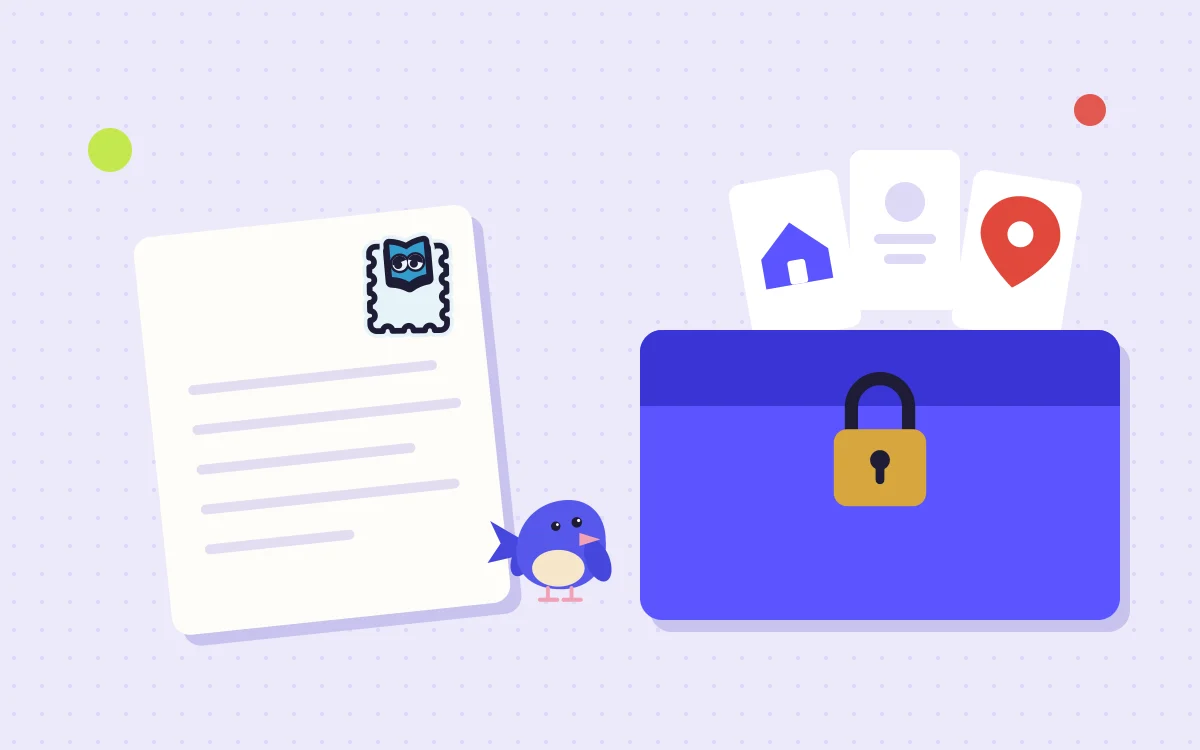
The principle: you are known by your words, not your details
The whole point of a correspondence is that someone gets to know you — how you think, what you notice, what you do on bad days — and none of that is in your surname, your street or your employer. A penpal who knows your kettle, your neighbour and your two-in-the-morning thoughts knows you far better than one who knows your LinkedIn.
So the rule is not share less. It is share the true things and keep the locating things. Be as honest as you like about what is going on inside you. Be vague, forever if you want, about anything that points at a door.
Keep, at least until you have a reason not to
- Your full name. A first name is fine when you are ready; a searchable one is a different thing.
- Where you live, closer than the city. "A city that smells of bread in the mornings" tells them more than your postcode anyway.
- Where you work, closer than the kind of work.
- Your face. Not because photos are dangerous, but because they change the correspondence — you stop being read and start being looked at.
- Your other accounts. The moment a penpal is also your Instagram follower, they are no longer your penpal.
- Money, in any direction. No exceptions. Not for postage, not for an emergency, not because they seem lovely.
Why anonymity works better, not just safer
On Kindredly nobody has their own name at the start — you are a courier name like Sunday Kite to the people who read you, and they are one to you. This began as a safety decision and turned into the best thing about the product. Without a name or a face to arrange yourself around, people write the honest version first. The strangers who answer are answering that, which means the correspondence starts from the true place instead of having to find its way there. After five letters each way, two people can choose to trade names. Many don't bother. They already know each other.
The five signs someone wants something other than a letter
None of these means the person is dangerous. All of them mean the correspondence is about to become something else, and you get to decide whether you want that.
- They want to move off the platform — WhatsApp, Telegram, email — early, and press when you decline. A real penpal is happy where the letters are.
- They ask for a photo, or send one unasked. Especially in the first three letters.
- The story escalates. A small problem in letter two is a crisis in letter four and a request in letter five. This is the shape of every romance scam ever written, and it is also, sometimes, just a person having a hard month. You are allowed not to find out which.
- They mirror you too perfectly. Same hometown, same loss, same rare taste in music. Real kindred spirits are alike in rhythm, not in facts.
- You feel managed. Guilt when you are slow to reply; flattery that lands slightly ahead of what you have written. Trust the feeling. It is usually right and it costs nothing to act on.
What to do
Stop writing. That is it. You owe a stranger nothing, and a correspondence that needs to be explained to be ended was not a correspondence. On any decent platform there is a way to block a person so they cannot reach you again and a way to report a letter; use both without ceremony. On Kindredly a report keeps a copy of what was said, and three separate readers reporting one writer closes their door.
And the good news
The vast majority of people who write to strangers are exactly what they appear to be: someone with a kettle and a bad week, looking for one other person who will read the true version. The rules above are not there to make you suspicious of them. They are there so that you can be completely honest with them — because you have kept the one thing that needed keeping, which was never your thoughts.
There are ten letters on the desk today. None of them has a name on it. You don't need to give yours to read them.
Questions people ask
What should you not tell a pen pal?
Keep your full name, where you live (anything closer than the city), where you work (anything closer than the kind of work), your face, your other social accounts and anything to do with money to yourself, at least until you have a reason not to. Share freely what your week was like, what you think, and what you're afraid of in general terms. The rule is to share the true things and keep the locating things.
How can you tell if a pen pal is a scammer?
Watch for five signs: pressure to move to WhatsApp, Telegram or email early, requests for photos, a story that grows from a small problem to a crisis to a request, someone who mirrors your hometown, loss or tastes too perfectly, and guilt or flattery that leaves you feeling managed. None of these proves a person is dangerous, but a request for money in any direction is a reason to stop. You owe a stranger no explanation: stop writing, block them and report the letter.
Is there a pen pal app that checks letters for safety?
Kindredly is one. It's an anonymous penpal app for iPhone and the web, for adults 18 and over, where strangers see a name the app gives you, never your own, and no face unless you both choose to trade names. A safety check reads letters before they go out to strangers and stops threats, harassment and attempts to swap contact details, social handles or money. Anyone can be reported or blocked in one tap, and when three different people report the same writer, that writer can no longer send letters.
pick one. i'll wait. (i'm a bird. i'm good at waiting.)
free · no profile · no photos of you
what you type stays on this device